
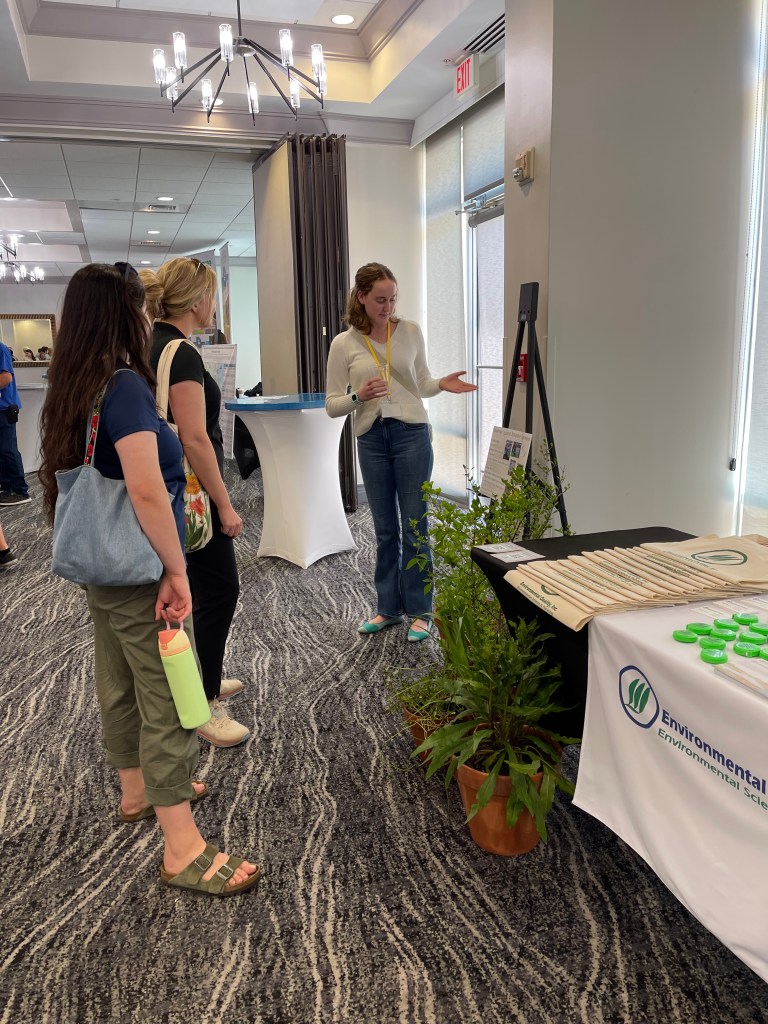
My first conference, hosted by the Florida Invasive Species Council (FISC → @fla_invasives), was an amazing opportunity & experience for me. I was grateful to connect with many different people from all parts of Florida about invasive species & discuss the projects I’ve been doing! 🌿
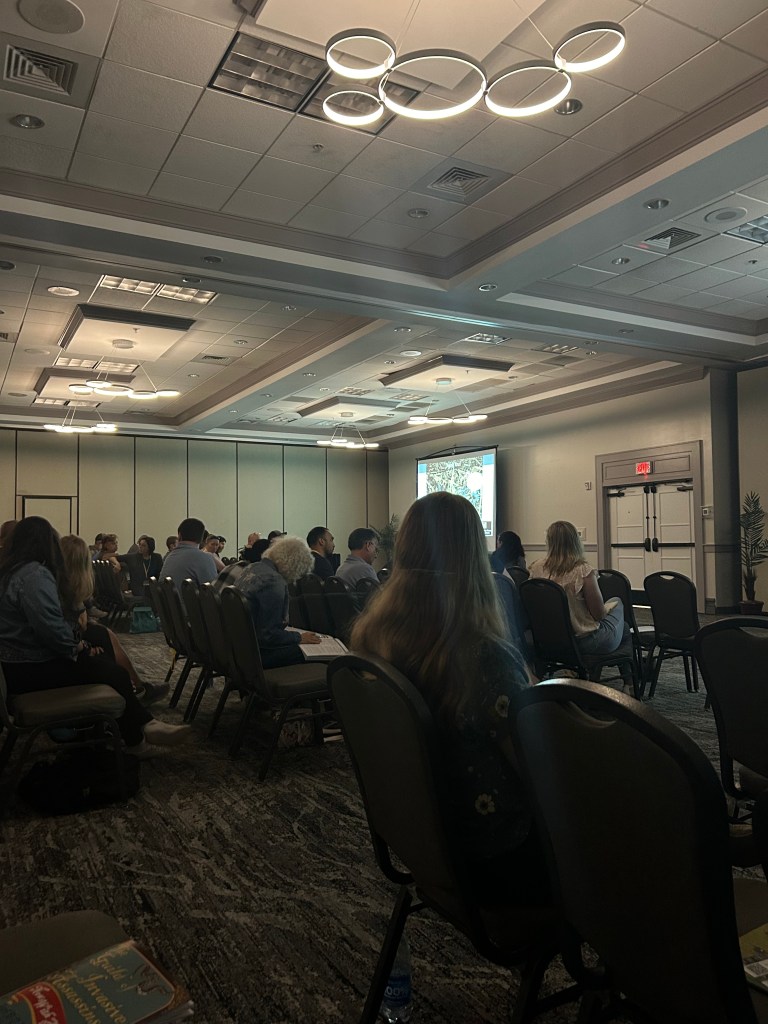
One of the main parts of the conference was listening to presentations about different aspects of invasive species research & management. This was very enlightening for me, as the presenters changed my perspective on so many topics. I’d like to pass on this knowledge & share some of the things I learned from people much more knowledgeable in the field than me!
- Interagency collaboration is vital to the success of invasive species management.
- During one presentation on the rapid response needed to combat Giant Salvinia, it became clear to me how many different agencies & contractors were needed to establish efficient management strategies. Jessica Spencer, who was the presenter, works for the US Army Corps of Engineers. However, the project required help from private contractors, the state & local governments, and even universities like UF, with the IFAS program. This would also apply to the project of eradicating Conehead Termites, which the FDACS is currently spearheading. The FDACS also requires collaboration from private contractors to eliminate this problem. Even with Burmese Pythons, there is a paid contractor program that is being run by Mike Kirkland in a collaboration between the Florida Fish and Wildlife Conservation Commission (FWC) and South Florida Water Management District (SFWMD). This program allows contractors to be paid by the hour (with a bonus for length + size of pythons) to hunt down & survey pythons. With any project, the collaboration of various agencies is vital to its success.
- Public opinion really, really matters.
- This is in relation to herbicides & chemicals. Many of the agencies who run programs to eradicate invasive species are public & affiliated with the government. For example, the FWC & the SFWMD are government agencies. To people who work there, public views on the subject are really important and they have to work to paint invasive species in an appropriately bad light. With prolific invasive species like Water Hyacinth, herbicides are often sprayed directly on top of or into the water. This can make people very upset, and I can understand why people would react negatively if they saw chemicals going into their waterways. One researcher, Kelly Gladding, did a presentation on a new herbicide that could be used to treat water hyacinth. This herbicide, Imazamox, would require much less frequent applications. One thing she mentioned was how less applications would, essentially, look better in the public eye! The line between appeasing the public vs. what is the best management strategy for invasives is a fine line to walk.
- Perception of invasive species has a huge impact on awareness.
- If you had said to me 2 years ago, name one invasive species, I would have said the Burmese python. It’s huge, scary to some, and has the reputation of a dangerous snake that will eat anything. But what about plants, like Lygodium or Hydrilla? Or tiny invasive flatworms that wreak havoc on ecosystems? 2 years ago, what did I know about those, versus big, bad snakes? Nothing, and scientists don’t know much either. Paul Evans presented his initiative to research invasive species that aren’t as well known, due to their size, perception, or looks. Management is very difficult, if not impossible for species that do not have information on them. His presentation was a huge eye-opener for me because it is so true! We do not know much about species that aren’t as vilified in the media or just aren’t as big – and those species could have just as bad of an impact on the ecosystem as a huge python.
I would say that these are the main lessons I learned, but an overarching theme of all the presentations was the importance of education! I am so lucky to be able to play a role in invasive species education, especially after learning more about its vitality to the survival of native species.
Photos from the conference!
Thank you for reading! Check out my instagram: @studentsagainstinvasivespecies
 Students Against Invasive Species
2 responses to “FISC Conference 2024”
this is so well written and thoughtful! Glad the conference went well
LikeLiked by 1 person
why thank you!
LikeLike